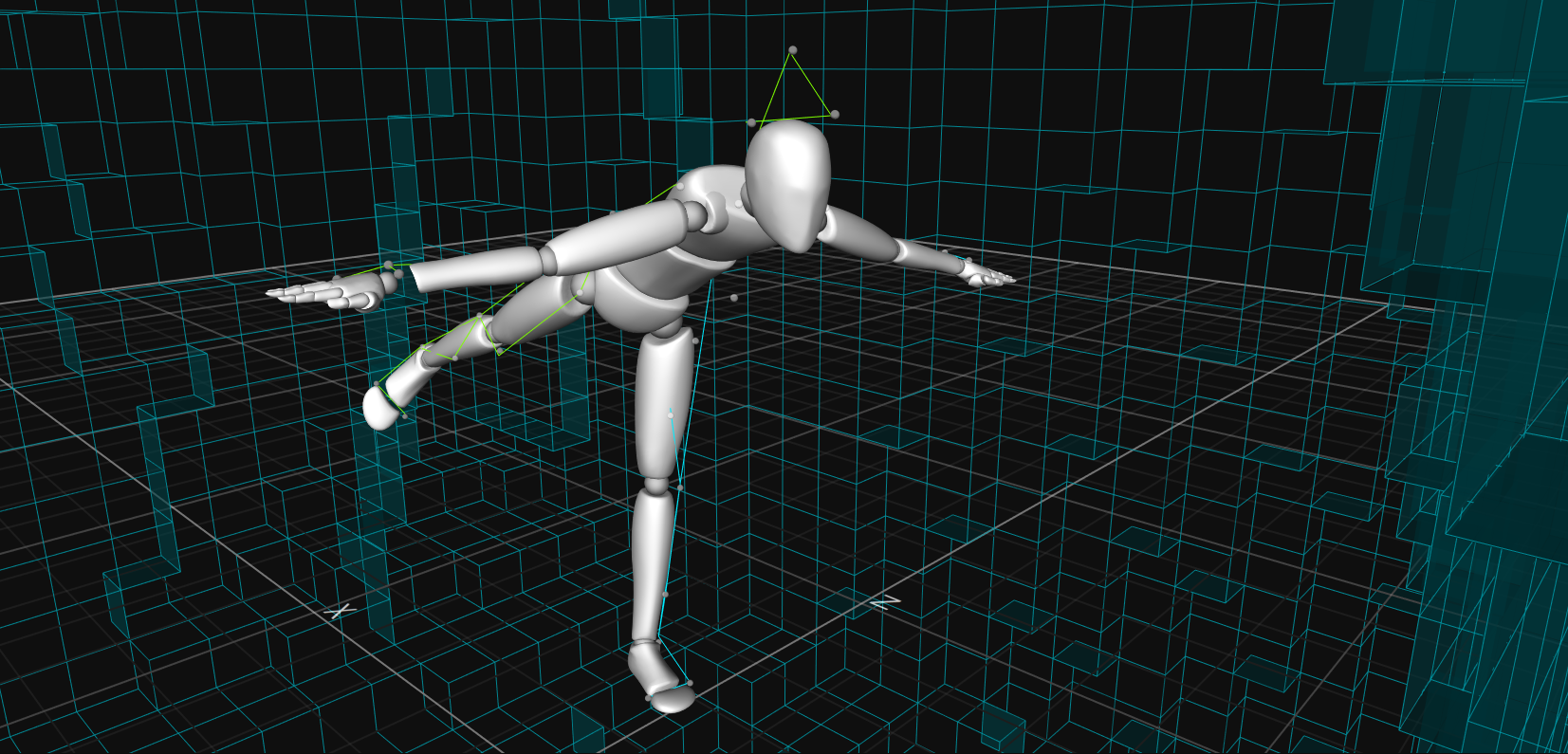
Analysis of movements of the lower and upper extremities
Movement analysis can provide valuable insight into motor function, disease progression and the effects of therapy, especially in patients with neurological or motor disorders. By combining sensor-based monitoring with advanced signal processing and artificial intelligence, it is possible to support more objective clinical assessment and improve the way patient condition is monitored over time.
For the analysis and quantification of movements of the lower and upper extremities, different sensor technologies are used, including inertial and camera-based systems. These technologies enable efficient and unobtrusive movement recording in clinical or controlled environments. The recorded signals are then processed using digital signal processing methods and intelligent algorithms to extract information that can support clinical interpretation.
The results include machine-learning-based differential diagnostics of patients with neurodegenerative diseases, automatic prediction of clinical scales using expert systems and specially developed learning rules, and validation of the developed solutions on different groups of participants. This demonstrates the potential of digital technologies and AI to support clinicians with more precise, objective and data-driven tools for assessing motor function.
Research studies are performed in collaboration with the Neurology Clinic Clinical Center of Serbia, Faculty of Medicine – University of Belgrade, and Institute for Intelligent Systems and Robotics, University Pierre and Marie Curie, Paris, France.